Namibia Destinations
Discover the timeless beauty of Namibia through its deserts, wildlife, coastlines, mountains and hidden gems. Explore every destination like turning the pages of a beautifully illustrated travel journal.
Namibia – A Land of Endless Horizons
Namibia is one of the most visually striking destinations in Africa, where ancient deserts meet dramatic coastlines and vast wildlife reserves. From the towering red dunes of Sossusvlei to the wildlife-rich plains of Etosha National Park, every region offers a unique and unforgettable landscape.
This Destination Guide is designed as a visual journey, helping you explore Namibia step by step as if you are turning the pages of a travel journal.
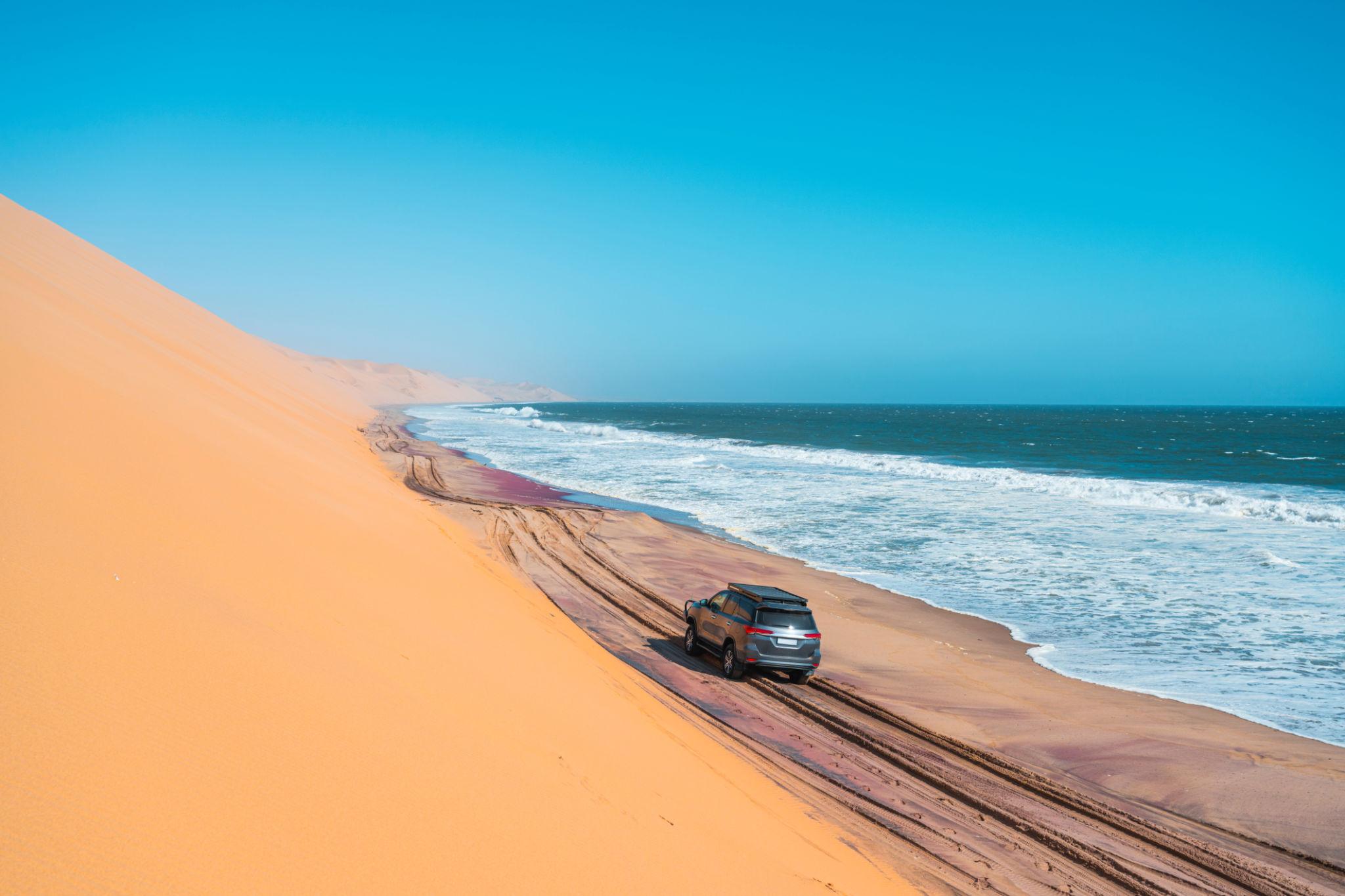
Sossusvlei
Sossusvlei is located in the heart of the Namib-Naukluft National Park and represents one of the most extraordinary desert landscapes on Earth. It is famous for its towering red sand dunes, some of which rise over 300 meters, making them among the highest dunes in the world.
The name “Sossusvlei” refers to a salt and clay pan surrounded by massive dunes that prevent the Tsauchab River from flowing further inland. This creates a rare and dramatic desert environment where water only appears occasionally after rare rainfall, temporarily transforming the pan into a shallow wetland.
The landscape is constantly shaped by wind. Each day, the dunes change color depending on the angle of the sun—from deep burnt orange in the early morning to glowing red at midday, and finally soft golden tones during sunset. This continuous transformation gives Sossusvlei a living, breathing quality despite its extreme dryness.
One of the most iconic dunes in the area is Big Daddy, which rises dramatically above the surrounding landscape. Climbing this dune offers a panoramic view over the white clay pan of Deadvlei and the endless sea of dunes beyond.
Sossusvlei is not only a geological wonder but also a place of silence, scale, and reflection. The vast emptiness amplifies soundlessness, creating an almost spiritual atmosphere that is rarely experienced elsewhere on Earth.
For photographers, early morning light is ideal. The low sun angle enhances the texture of the sand and creates long shadows that define the visual identity of Namibia’s desert landscape.
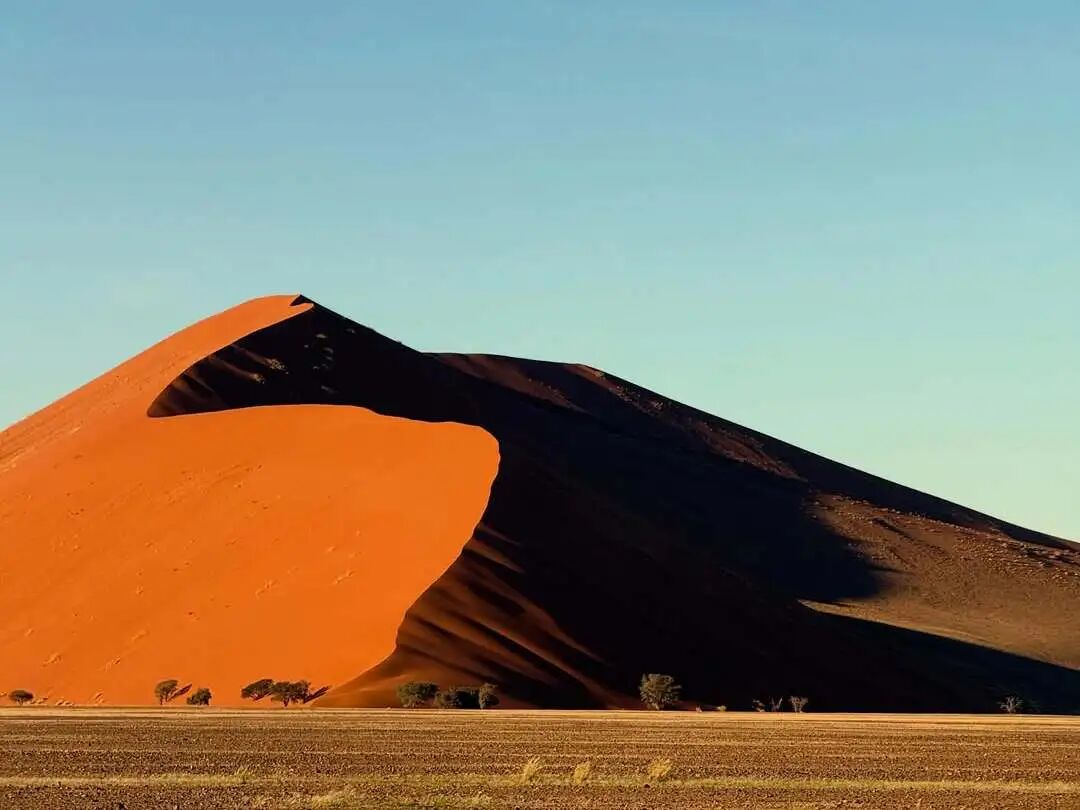
Swakopmund
Swakopmund is a coastal town where the vast emptiness of the Namib Desert suddenly meets the cold waters of the Atlantic Ocean. This unusual geographical collision creates a unique atmosphere that feels both European and African at the same time. Founded during the German colonial era, the town still preserves its historic architecture, with pastel-colored facades, ornate wooden balconies, and quiet palm-lined streets that contrast sharply with the surrounding desert wilderness.
Walking through Swakopmund feels like stepping into a different world within Namibia. The air is cooler, often carried by ocean fog rolling inland from the Benguela Current, softening the edges of the desert beyond. Cafés, bakeries, and seaside promenades give the town a relaxed rhythm, making it a natural pause point within a journey across Namibia’s harsher landscapes.
Yet Swakopmund is not only about atmosphere and architecture. It is also the country’s adventure capital, offering some of the most diverse desert-based activities in Southern Africa. From sandboarding down steep dunes to quad biking across shifting sands, and even skydiving above the desert coastline, the region transforms the surrounding emptiness into a natural playground for exploration.
Just outside the town, the landscape quickly becomes raw and dramatic again. Endless dunes stretch toward the horizon, while the ocean remains cold, powerful, and often wrapped in mist. This contrast between calm urban life and extreme natural environment is what defines Swakopmund’s identity.
At sunset, the light softens across both desert and ocean, creating a muted palette of gold, blue, and grey. It is in these quiet hours that Swakopmund reveals its most balanced character—a place suspended between two worlds, where civilization and wilderness exist side by side without conflict.
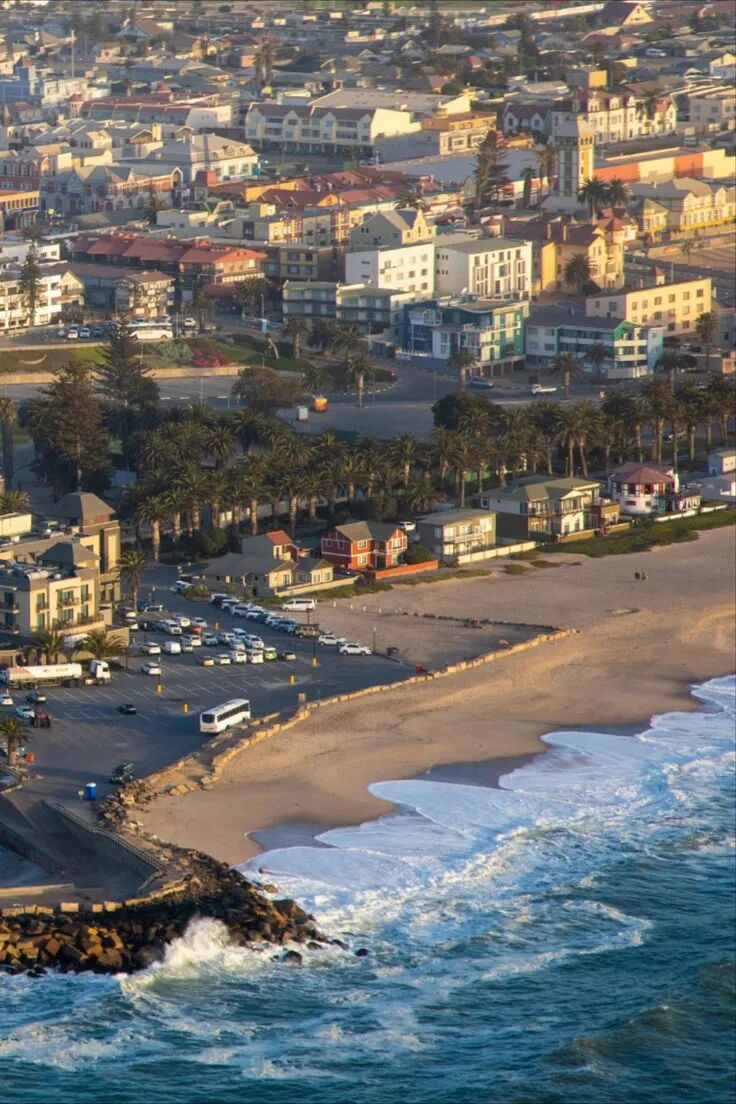
Walvis Bay
Walvis Bay is Namibia’s primary coastal lagoon and one of the most important marine ecosystems along the southern Atlantic coast. Unlike the dramatic dunes of the interior, this environment is defined by calm waters, tidal movements, and dense concentrations of birdlife that gather along its shallow shores. It is a place where the rhythm of nature is slow, repetitive, and deeply tied to the ocean.
The lagoon is particularly known for its large populations of flamingos, which often gather in thousands, painting the water surface in shifting tones of pink. Pelicans glide silently above the water, while cormorants and other seabirds form constantly moving patterns across the sky. Early morning is the most active time, when feeding behavior and tidal changes create the most dynamic scenes.
Walvis Bay is also the departure point for marine excursions into the Atlantic Ocean. These boat trips offer close encounters with Cape fur seals, dolphins, and occasionally whales depending on the season. The interaction between wildlife and human presence is gentle and observational, allowing visitors to experience the marine environment without disruption.
Beyond wildlife, the lagoon also reflects the unique geography of Namibia’s coastline. Desert dunes rise in the distance, meeting the ocean in a rare visual combination of sand, water, and sky. The air is often cool and filled with a soft coastal mist, creating a calm and almost meditative atmosphere.
Unlike inland deserts that are defined by silence and heat, Walvis Bay is shaped by movement—water currents, bird migration, and shifting tides. It offers a softer but equally powerful interpretation of Namibia’s natural diversity.
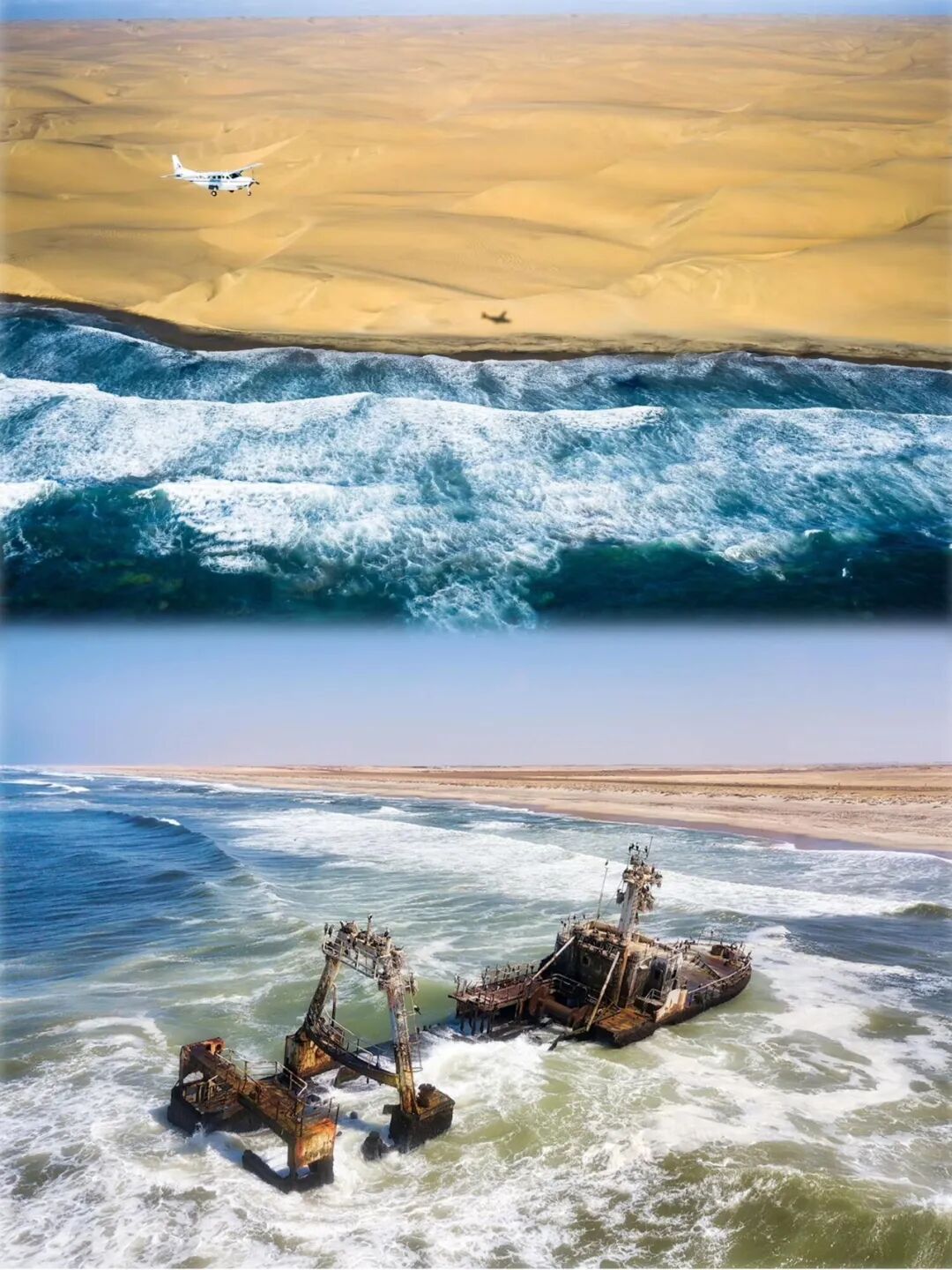
Sandwich Harbour
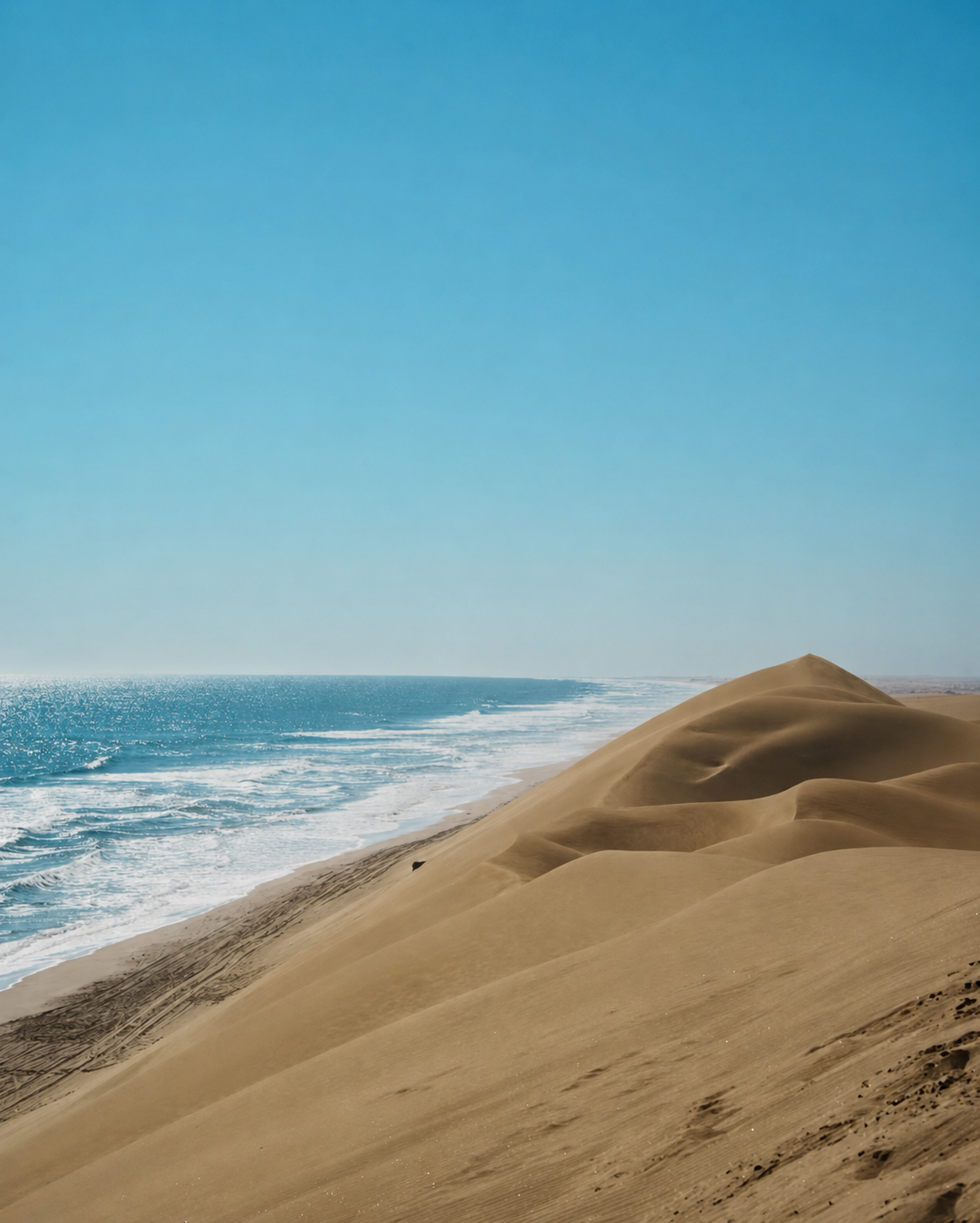
Sandwich Harbour is one of the most extreme and visually powerful landscapes in Namibia, where towering sand dunes descend directly into the Atlantic Ocean. This rare meeting of desert and sea creates a dramatic and almost unreal environment that is accessible only by 4×4 vehicles, reinforcing its sense of isolation and raw natural beauty.
The journey into Sandwich Harbour itself is part of the experience. Drivers must navigate soft sand, steep dune slopes, and constantly shifting terrain, where the landscape changes with every tide and wind pattern. As the dunes rise higher, the ocean gradually disappears behind walls of sand, until only desert remains in every direction.
From the top of the dunes, the views are vast and uninterrupted. One side reveals endless golden ridges stretching into the Namib Desert, while the other drops sharply into the deep blue Atlantic Ocean. The contrast is immediate and powerful, emphasizing the uniqueness of this environment.
There is no infrastructure, no noise, and no permanent human presence in Sandwich Harbour. It exists entirely under natural control, shaped by wind, tide, and time. This absence of development enhances its emotional impact, making it feel like one of the last truly untouched coastal wildernesses in the world.
For many travelers, Sandwich Harbour represents the moment where Namibia’s identity becomes clearest—an unfiltered expression of scale, contrast, and elemental power.
Spitzkoppe
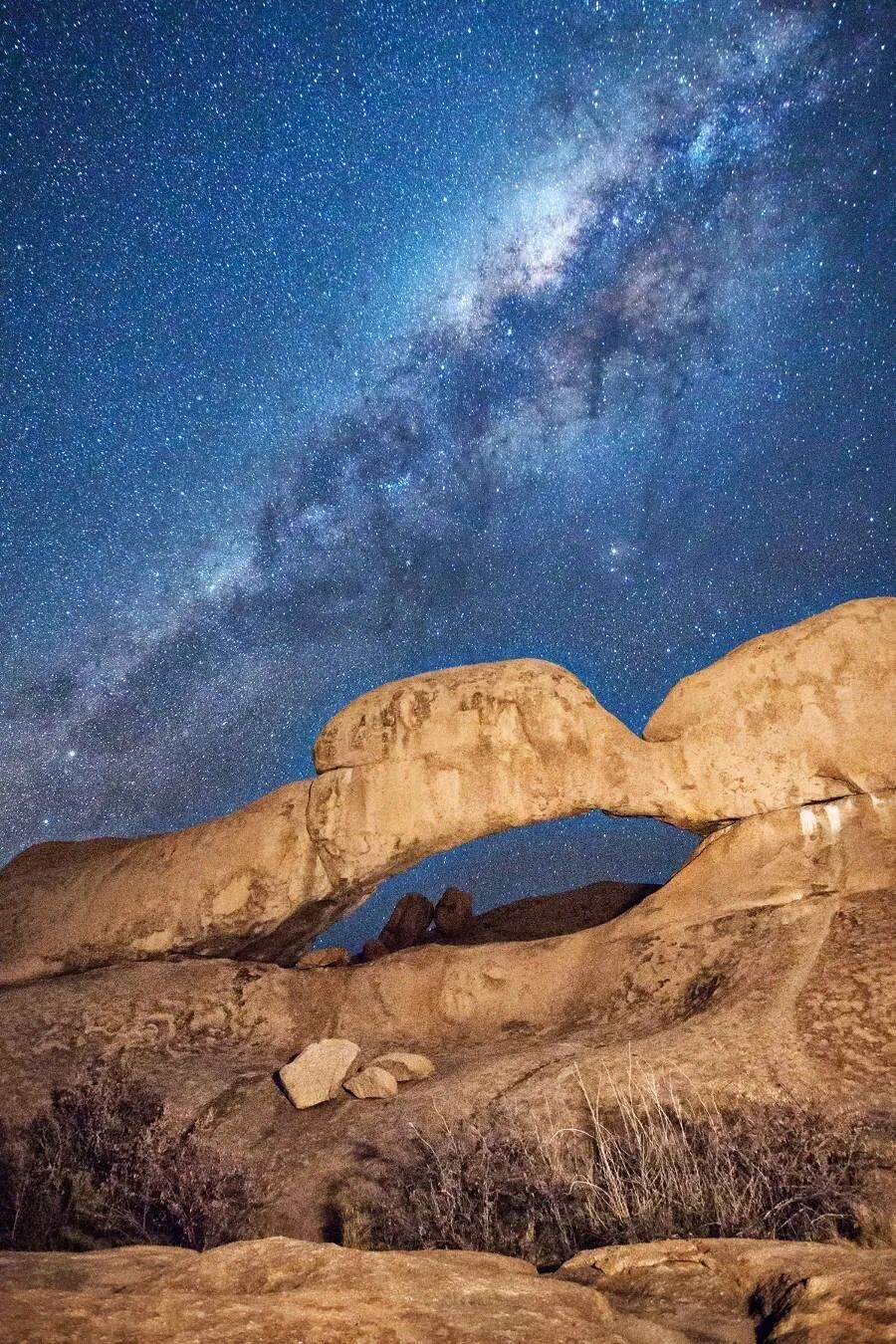
Spitzkoppe is one of Namibia’s most iconic and visually striking natural landmarks, often referred to as the “Matterhorn of Namibia” due to its dramatic granite peaks rising abruptly from the surrounding flat desert plains. Estimated to be over 120 million years old, this ancient inselberg is part of one of the most geologically significant granite formations in southern Africa, making it a globally recognized destination for landscape photographers and geology enthusiasts alike.
What makes Spitzkoppe internationally famous is its extraordinary combination of massive granite domes, surreal rock arches, and endless desert horizons. The contrast between smooth sculpted rock surfaces and the harsh Namib Desert creates one of the most photogenic minimalist landscapes in Africa. Unlike heavily vegetated mountain regions, Spitzkoppe offers pure visual composition—rock, sky, light, and shadow—allowing photographers to create highly artistic and uncluttered imagery.
For photographers, Spitzkoppe is considered one of Namibia’s most important “golden hour and astrophotography locations.” At sunrise, the granite peaks glow in deep orange and red tones, while sunset transforms the entire landscape into silhouettes and warm gradients. At night, the absence of artificial light pollution reveals one of the clearest night skies in the world, making it a premier destination for Milky Way photography. Many international photography expeditions include Spitzkoppe as a mandatory stop due to its unmatched natural lighting conditions and composition potential.
Beyond its visual appeal, Spitzkoppe is also culturally significant, with ancient San rock paintings hidden within its granite formations, some believed to be thousands of years old. These petroglyphs add a human historical layer to an already dramatic natural environment, connecting geological time with early human presence in the region.
For travelers, Spitzkoppe is not just a scenic stop but an immersive landscape experience where scale, silence, and light dominate the environment. It is a place where photography becomes intuitive, where every angle feels cinematic, and where Namibia’s raw geological beauty is displayed in its purest form.
Etosha National Park
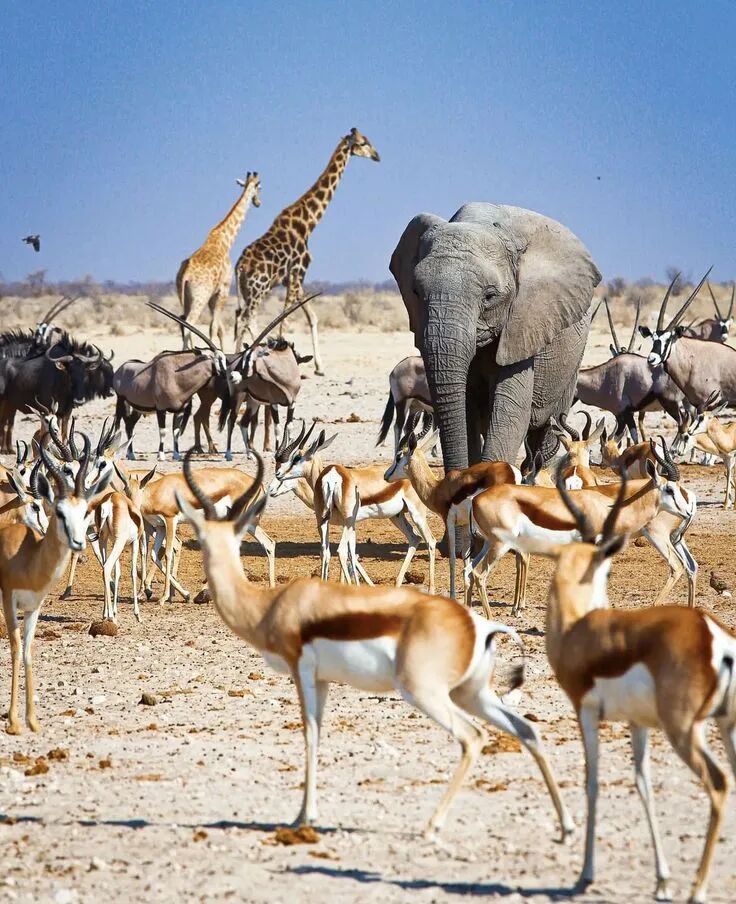
Etosha National Park is one of Africa’s most celebrated safari destinations and the undisputed wildlife heart of Namibia. Covering more than 22,000 square kilometres, the park protects an extraordinary diversity of landscapes and animals, offering visitors one of the finest self-drive safari experiences on the continent. Unlike many African national parks that are characterised by dense forests or river systems, Etosha’s unique identity is shaped by openness, light, and the vast white expanse of the legendary Etosha Salt Pan.
Visible even from space, the Etosha Salt Pan dominates the centre of the park and serves as a reminder of an ancient lake that disappeared thousands of years ago. During the dry season, the pan becomes an immense white plain stretching towards the horizon, creating one of Namibia’s most iconic landscapes. When seasonal rains arrive, shallow water briefly returns, attracting flamingos and countless migratory birds before once again evaporating beneath the African sun.
Wildlife viewing in Etosha revolves around one of nature’s simplest yet most fascinating events—the gathering of animals around water. Throughout the long dry months, permanent waterholes become essential lifelines, drawing elephants, lions, black rhinos, giraffes, zebras, springboks, wildebeests and countless other species into surprisingly close proximity. Rather than searching endlessly through thick vegetation, visitors often find themselves quietly waiting beside a waterhole as Africa’s wildlife gradually comes to them.
Among the park’s many residents, elephants are perhaps the most memorable. Their pale grey skin, often coated with the park’s distinctive white mineral dust, gives them an appearance unlike elephants found elsewhere in Africa. Lions frequently patrol the open plains surrounding the waterholes, while the endangered black rhinoceros remains one of Etosha’s greatest conservation successes. Giraffes stride gracefully across the open savannah, and large herds of antelope provide endless opportunities for wildlife photography throughout the day.
Etosha is also renowned for its three historic rest camps, each offering a different perspective on the park. Okaukuejo is famous for its floodlit waterhole, where elephants, rhinos and other wildlife can often be observed long after sunset. Halali, located between the western and eastern regions of the park, provides easy access to diverse habitats and peaceful surroundings beneath shady mopane trees. Namutoni, built around a beautifully restored German fort, combines colonial history with excellent access to the eastern grasslands, where large herds of zebra and antelope are frequently encountered.
One of the greatest pleasures of visiting Etosha is the freedom of exploring at your own pace. Quiet gravel roads connect dozens of waterholes across the park, each offering a different wildlife experience. Every game drive becomes unpredictable, as no two days are ever the same. A solitary elephant may appear from the shimmering heat, a pride of lions may suddenly emerge from beneath an acacia tree, or a black rhino may cautiously approach a waterhole under the fading light of dusk.
As the sun sets, Etosha reveals yet another side of its character. The golden grasslands gradually fade into soft evening colours, wildlife becomes more active, and silence settles across the vast plains. Above, Namibia’s remarkably clear night sky fills with countless stars, reminding visitors that they are standing in one of Africa’s last great wildernesses.
More than simply a national park, Etosha is a place where the rhythm of nature unfolds before your eyes. It is a destination defined not by spectacular scenery alone, but by unforgettable wildlife encounters, endless horizons, and the timeless beauty of Africa’s natural world.
Quiver Tree Forest
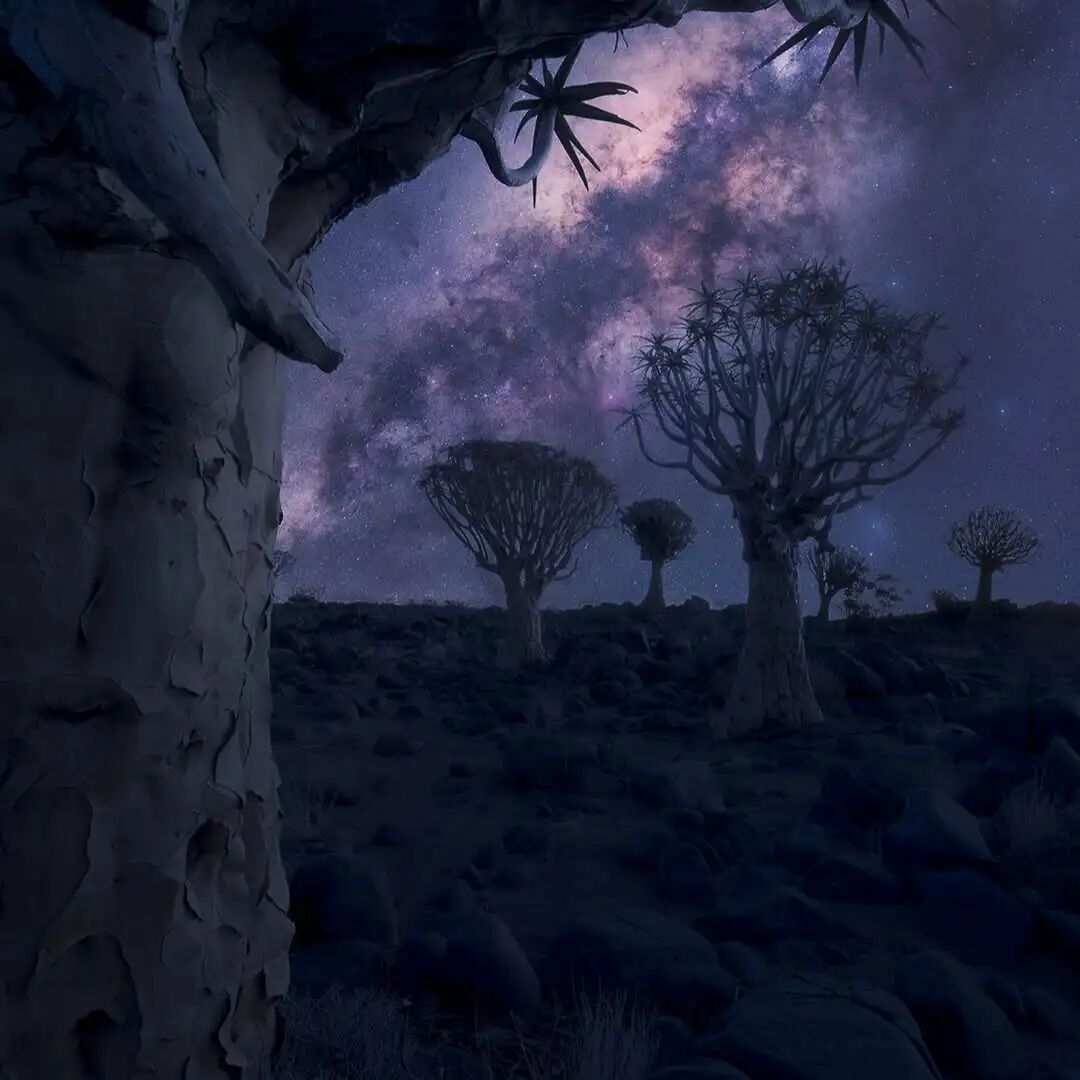
Quiver Tree Forest is one of southern Namibia’s most iconic and surreal landscapes, internationally recognized as a premier destination for astrophotography and desert landscape photography. Located near Keetmanshoop, this extraordinary site is home to the ancient Aloe dichotoma, a rare and protected tree species that has become a symbol of survival in extreme arid environments. The forest is not a traditional woodland but a vast open rocky terrain where hundreds of sculptural quiver trees stand isolated against an endless desert sky, creating a visually striking composition found nowhere else in the world.
What makes this location globally significant is its reputation as one of Namibia’s most important night-sky photography destinations. With virtually zero light pollution, Quiver Tree Forest offers crystal-clear visibility of the Milky Way, making it a favourite among international astrophotographers. It is widely regarded as one of the most accessible “dark sky” landscapes in southern Africa, often included in Namibia’s top stargazing circuits.
During the day, the site transforms into a world-class landscape photography location. The combination of red desert light, ancient tree silhouettes, and granite rock formations creates a minimalist yet dramatic aesthetic that has made it a signature image of Namibia’s southern region. At sunrise and sunset, the entire forest glows with deep golden and crimson tones, offering some of the most cinematic lighting conditions in the country.
Beyond its visual appeal, Quiver Tree Forest also holds ecological and scientific importance. The Aloe dichotoma is a nationally protected species in Namibia and represents one of the most remarkable examples of desert adaptation, capable of storing water and surviving extreme temperature fluctuations. This resilience has made the forest a living symbol of endurance in one of the harshest climates on Earth.
More than just a scenic stop, Quiver Tree Forest is a destination where geology, ecology, and photography converge. It is a place that attracts travelers seeking silence, scale, and authenticity, and it consistently ranks among Namibia’s most photographed desert landscapes due to its unique visual identity and world-class night skies.
Fish River Canyon
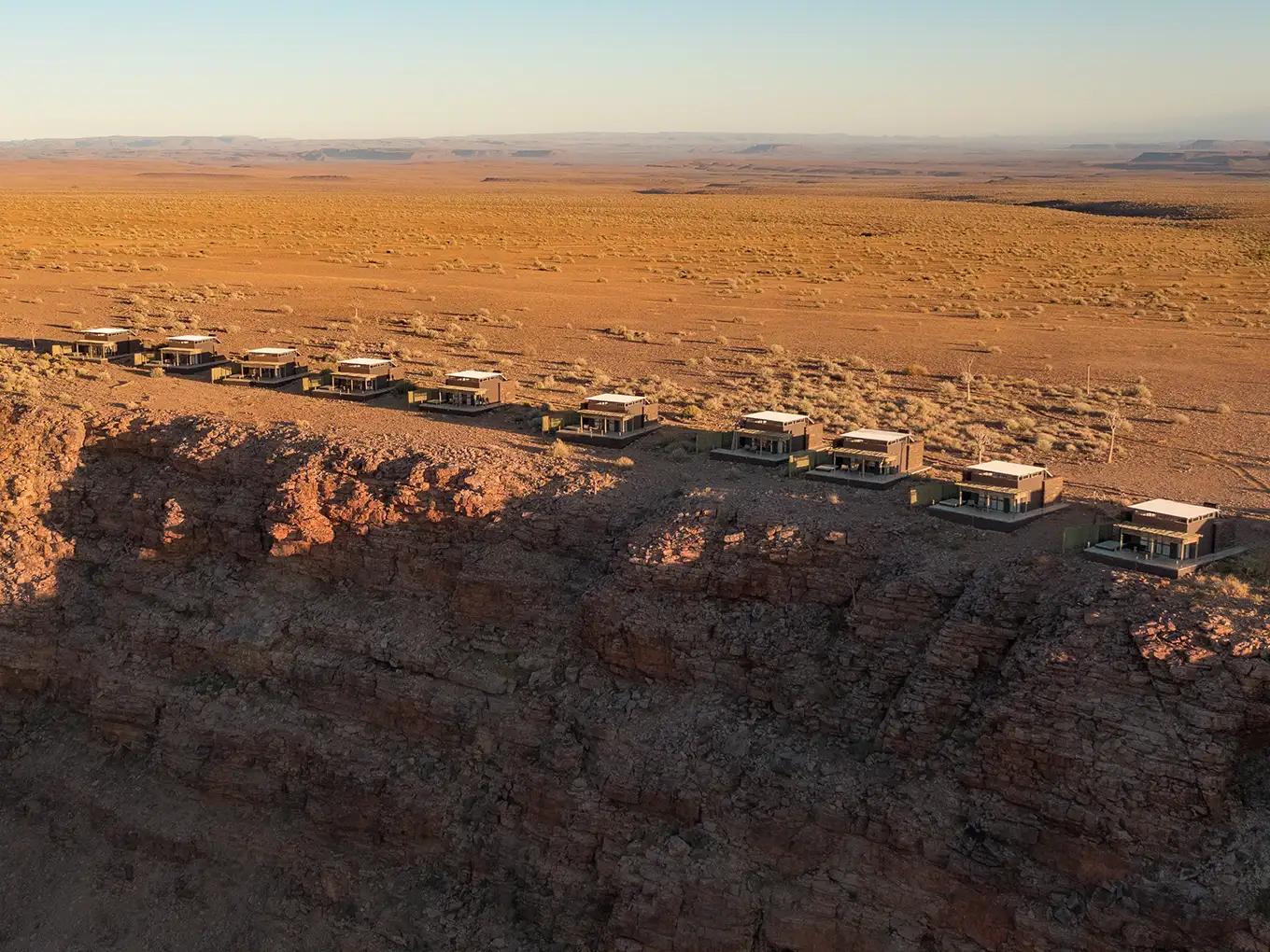
Fish River Canyon is one of the world’s largest canyons and undoubtedly one of Namibia’s most spectacular natural wonders. Stretching for approximately 160 kilometres, reaching depths of more than 500 metres and widths of up to 27 kilometres, this immense geological masterpiece has been sculpted over hundreds of millions of years by tectonic activity, erosion, and the persistent flow of the Fish River. Standing at the edge of the canyon, visitors are immediately struck by its overwhelming scale, where endless layers of rock disappear into the distance beneath the vast African sky.
Unlike lush river valleys elsewhere in the world, Fish River Canyon is defined by its rugged beauty and dramatic desert environment. The canyon walls reveal countless layers of ancient rock, each recording a chapter of Earth’s geological history. During the dry season, much of the river becomes a chain of isolated pools winding through the canyon floor, creating a striking contrast between the barren cliffs and the precious water that sustains life in this arid landscape.
One of the canyon’s greatest attractions is its ever-changing appearance throughout the day. At sunrise, the first rays of light gently illuminate the eastern cliffs, gradually revealing intricate rock formations and deep shadows carved into the landscape. By midday, the canyon displays its full grandeur beneath Namibia’s brilliant blue sky. As evening approaches, warm golden light transforms the rocks into shades of amber, crimson, and copper, creating one of the country’s most unforgettable sunset experiences.
Although the canyon is best known for its panoramic viewpoints, it is also home to a surprising variety of wildlife adapted to this harsh environment. Klipspringers navigate the steep rocky slopes with remarkable agility, while baboons, mountain zebras, springboks and numerous bird species inhabit the surrounding plateau. During the cooler months, the famous Fish River Canyon Hiking Trail becomes one of Africa’s most challenging and rewarding long-distance hikes, attracting experienced adventurers from around the world.
For photographers, Fish River Canyon offers endless creative opportunities. Every viewpoint presents a completely different composition, with winding riverbeds, layered cliffs and dramatic light combining to produce extraordinary images. Wide-angle photography is particularly rewarding here, allowing visitors to capture the immense scale that defines the canyon. Sunrise and sunset remain the most sought-after moments, when low-angle light reveals every texture and contour of the ancient landscape.
Despite its immense size, Fish River Canyon possesses a remarkable sense of tranquillity. There are no bustling crowds, no towering skyscrapers on the horizon, and no artificial sounds interrupting the silence. Instead, visitors experience only the gentle wind, the distant call of birds, and the profound stillness of one of Africa’s oldest landscapes. It is a place where time seems almost irrelevant, inviting travellers to pause, reflect, and appreciate the extraordinary power of nature.
More than simply a geological landmark, Fish River Canyon represents the timeless beauty of southern Namibia. It is a destination where vastness, silence, and ancient history come together to create an experience that remains with visitors long after they leave.
Skeleton Coast
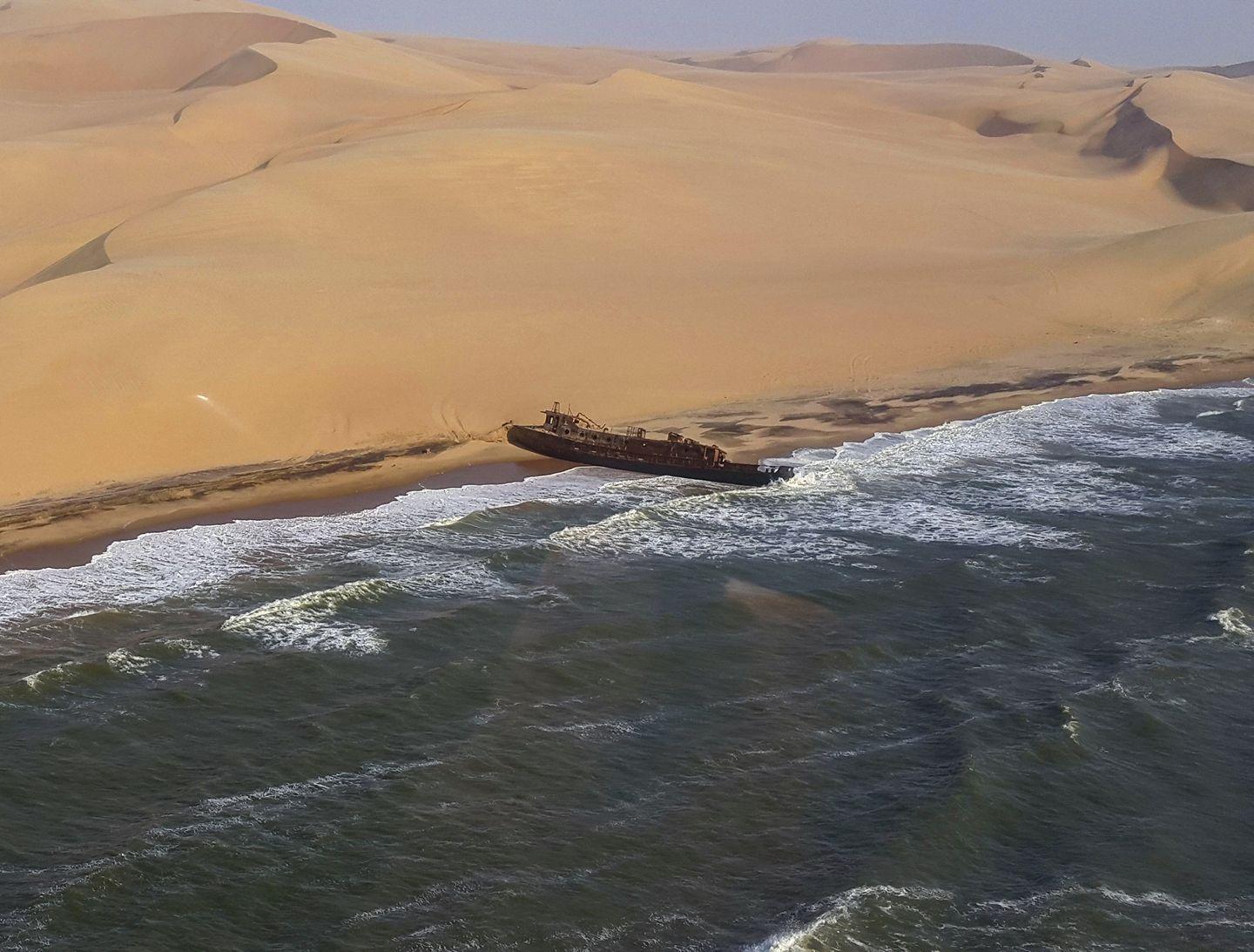
The Skeleton Coast is one of the most remote and hauntingly beautiful coastlines on Earth, stretching along northern Namibia where the Namib Desert meets the cold Atlantic Ocean. Internationally known as the “Shipwreck Coast,” this region earned its name from the countless shipwrecks scattered along its fog-covered shoreline, caused by dense Atlantic mists, strong currents, and unpredictable coastal conditions. It is widely regarded as one of the most isolated and atmospheric desert-coast ecosystems in the world.
What makes the Skeleton Coast globally unique is its extreme contrast between fire and ice: the scorching Namib Desert suddenly drops into a cold, fog-drenched Atlantic shoreline. This collision of climates creates an environment that feels almost alien, where dunes roll directly into the ocean and visibility can shift from crystal clear to completely white within minutes. The region is also part of Namibia’s protected wilderness zones, preserving one of the last truly untouched coastal landscapes on the planet.
Wildlife in this region survives under extreme conditions, with desert-adapted elephants, lions, and hyenas occasionally moving through the inland dunes, while Cape fur seals gather in massive colonies along the coast. The Skeleton Coast is not a typical sightseeing destination but a rare expedition-style experience, often accessed through guided overland or fly-in safaris, making it one of Namibia’s most exclusive and dramatic travel regions.
For photographers and explorers, Skeleton Coast represents raw isolation, dramatic light, and untouched wilderness. It is a place where silence dominates, where shipwreck remains emerge from the sand like forgotten history, and where the boundary between ocean, desert, and fog dissolves into one of the most surreal landscapes in Africa.
Lüderitz
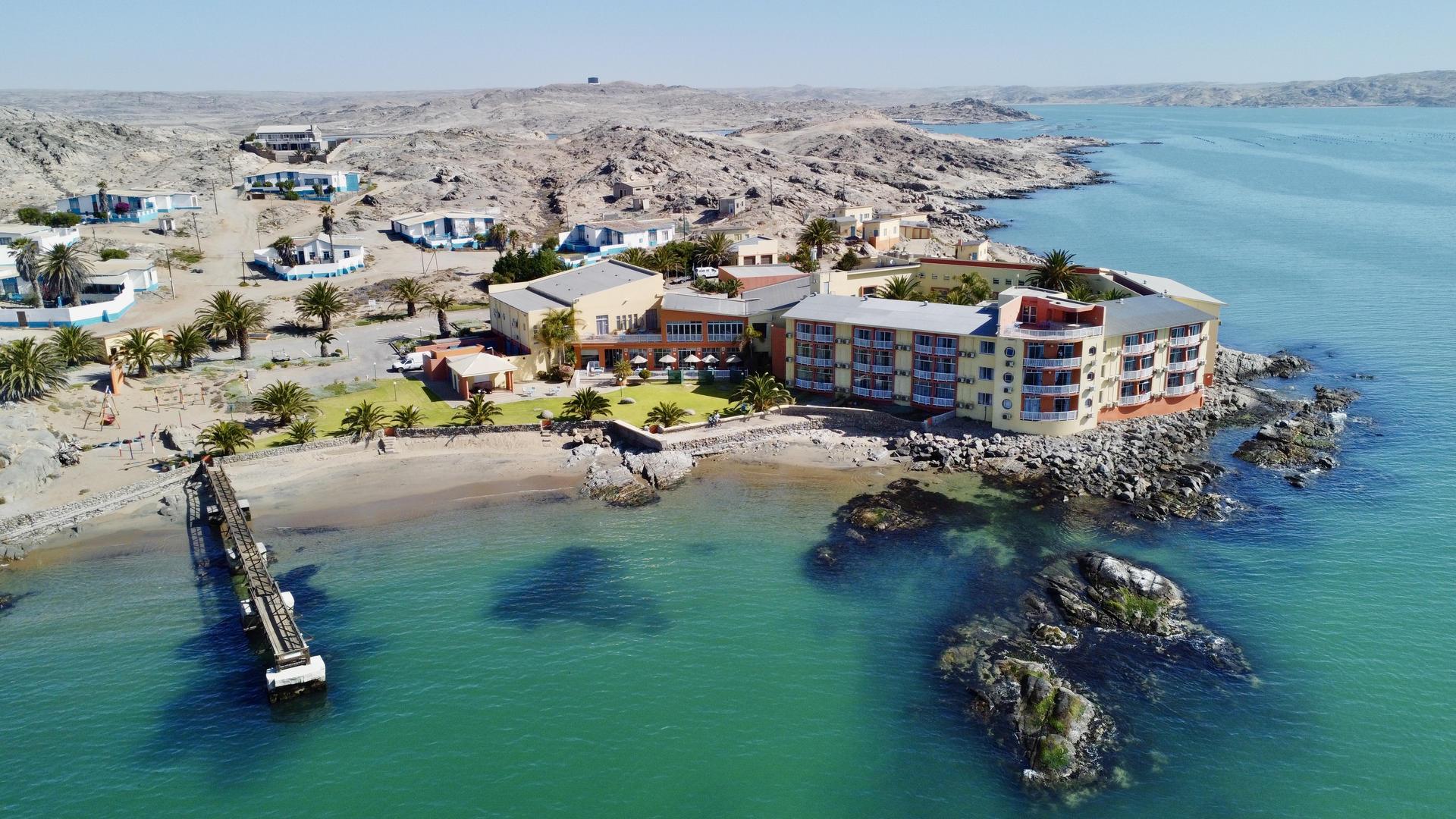
Lüderitz is one of Namibia’s most atmospheric coastal towns, located on the edge of the Atlantic Ocean where the Namib Desert meets cold ocean winds. Known for its well-preserved German colonial architecture, pastel-colored buildings, and dramatic coastal isolation, the town feels like a frozen fragment of early 20th-century Europe set against one of the harshest desert environments on Earth. Its unique geographical position creates a constant interplay between fog, wind, and light, giving Lüderitz an almost cinematic and melancholic beauty.
Historically, Lüderitz played a key role in Namibia’s colonial and diamond mining history. It became an important port during the German colonial era, and the discovery of diamonds nearby transformed the region into one of southern Africa’s most significant mining zones. Today, Lüderitz is less about modern development and more about preserved heritage, quiet streets, and raw Atlantic coastline, making it a destination valued for atmosphere rather than scale.
For travelers, Lüderitz offers a rare combination of ocean wilderness and historical architecture. The surrounding desert meets the sea in a dramatic and untouched way, while the town itself provides a peaceful contrast of color and structure. It is often visited together with Kolmanskop, making it part of one of Namibia’s most visually striking coastal routes.
Kolmanskop Ghost Town
Kolmanskop is one of the most iconic ghost towns in the world and a globally recognized photography hotspot, located in the Namib Desert near Lüderitz. Once a wealthy diamond mining settlement in the early 20th century, it rapidly developed under German colonial administration before being abandoned when diamond deposits declined. Today, it stands as a haunting and surreal symbol of human ambition reclaimed by nature.
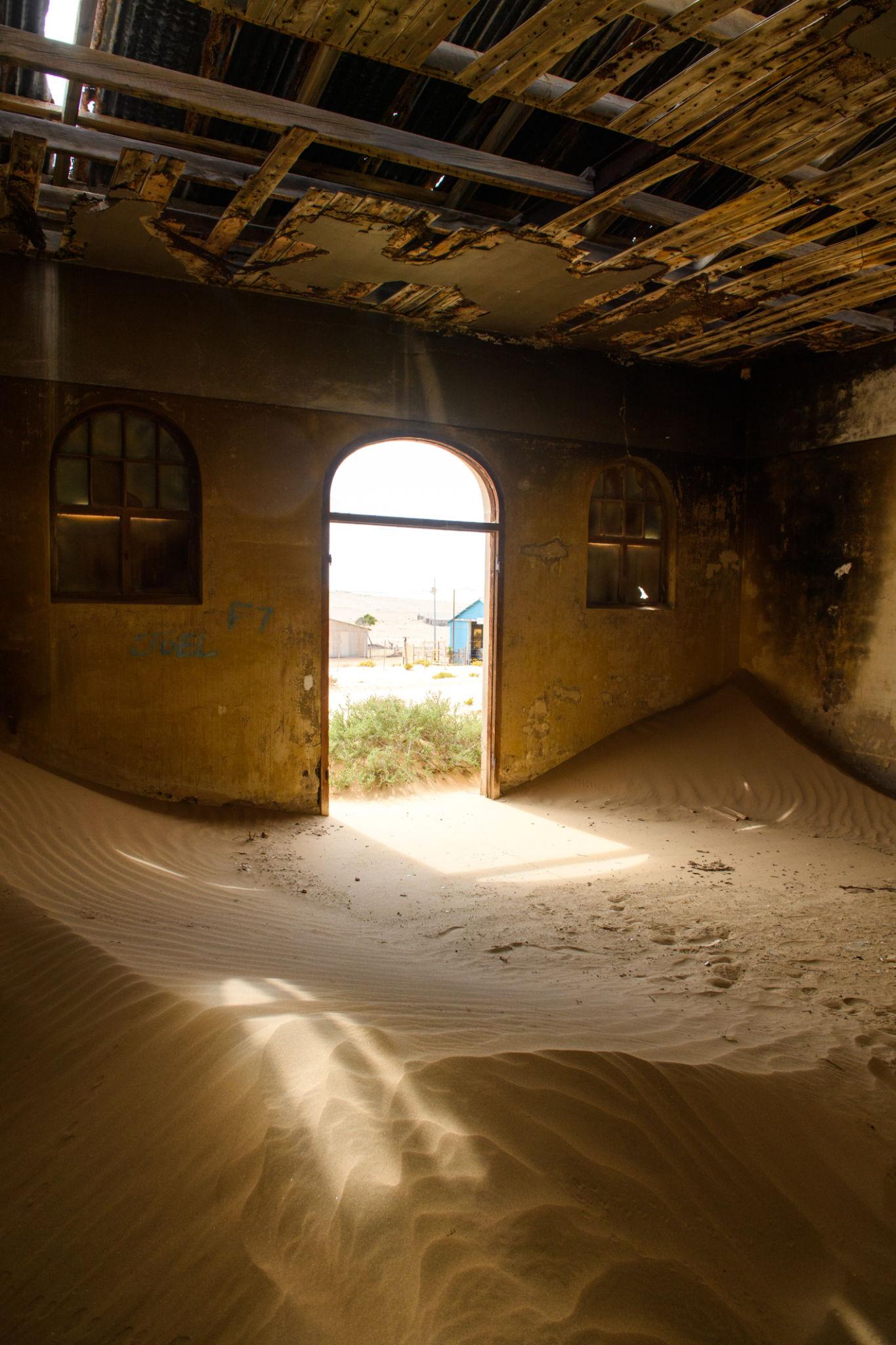
What makes Kolmanskop internationally famous is its extraordinary visual transformation process: desert sands have completely invaded and filled the interiors of once-elegant German-style buildings. Rooms, hallways, and staircases are now occupied by drifting dunes, creating surreal interior landscapes where architecture and desert coexist in the same physical space. This rare phenomenon makes Kolmanskop one of the most photographed abandoned sites in the world.
For photographers, Kolmanskop is considered a “dream location of light and decay.” Morning sunlight streams through broken windows, casting sharp geometric shadows across walls of sand, while afternoon light creates deep contrast between architectural frames and flowing dunes. The constantly shifting sand patterns inside buildings ensure that no two images are ever the same, making every visit visually unique.
Internationally, Kolmanskop is widely regarded as one of the top abandoned photography destinations on Earth due to its perfect combination of colonial architecture, desert invasion, and natural light control. It is frequently featured in global photography publications and is a key highlight on Namibia’s southern route.
Beyond its visual appeal, Kolmanskop represents a powerful narrative of impermanence—how human settlements can be absorbed and erased by natural forces over time. Walking through its sand-filled rooms feels like entering a suspended moment in history, where time, decay, and beauty intersect.
Cheetah Conservation Fund
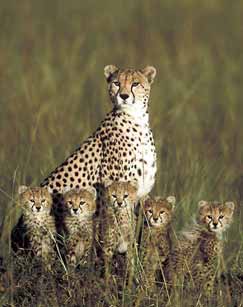
The Cheetah Conservation Fund (CCF), located in central Namibia near Otjiwarongo in the Erongo region, is internationally recognized as the world’s leading institution dedicated to the long-term survival of wild cheetahs. Founded in 1990 by renowned conservation biologist Dr. Laurie Marker, CCF is not only a research and education centre, but also one of the few places in Africa where visitors can experience controlled, ethical, and educational encounters with cheetahs in a conservation setting.
Unlike commercial wildlife attractions, CCF operates at the core of global cheetah conservation science. It is widely regarded as the “Cheetah Capital of the World” for research, rehabilitation, and genetic preservation efforts. The centre combines field conservation, veterinary care, ecological research, and community education into a single integrated system that supports both wildlife protection and human–wildlife coexistence in Namibia’s rural landscapes.
One of the most unique aspects of CCF is its carefully managed cheetah viewing and interaction experience. Visitors may observe rescued or non-releasable cheetahs at close range under strict supervision, allowing a rare opportunity to understand their behavior, speed, anatomy, and survival challenges. These encounters are designed for education rather than entertainment, making CCF one of the most respected ethical wildlife interaction sites in southern Africa.
CCF is also globally known for its pioneering conservation strategies, including predator-friendly farming programs, livestock guardian dog initiatives, and long-term genetic research such as cheetah sperm banking. These efforts are essential in protecting one of Africa’s most vulnerable big cat species, which has experienced significant population decline in the wild over the past decades.
For travelers, a visit to CCF offers more than wildlife viewing—it provides a deeper understanding of Namibia’s conservation leadership. It is a place where science, education, and wildlife coexist, and where visitors can witness one of the fastest animals on Earth not in a zoo-like setting, but within a real conservation mission actively working to ensure its survival.
Damaraland
Damaraland is one of Namibia’s most remarkable and least disturbed wilderness regions, where ancient mountains, volcanic formations, and endless open plains create a landscape unlike anywhere else in Southern Africa. Covering vast stretches of northwestern Namibia, this rugged region is defined not by a single landmark, but by its extraordinary combination of dramatic geology, unique wildlife, and thousands of years of human history.
Unlike the towering red dunes of the Namib Desert, Damaraland presents a harsher and more rugged beauty. Massive granite outcrops rise from wide gravel plains, while weathered volcanic rocks reveal millions of years of geological evolution. Throughout the day, sunlight transforms the landscape into an ever-changing palette of gold, ochre, deep red, and charcoal grey, making every hour a different visual experience.
Despite its harsh climate, Damaraland supports an astonishing variety of wildlife specially adapted to survive in one of Africa’s driest environments. The region is best known for its desert-adapted elephants, a rare population that has evolved remarkable survival strategies. These elephants travel great distances along dry riverbeds in search of water and vegetation, demonstrating an extraordinary resilience that has become one of Namibia’s greatest conservation success stories. Visitors may also encounter giraffes, springboks, mountain zebras, ostriches, and numerous bird species that thrive within this fragile ecosystem.
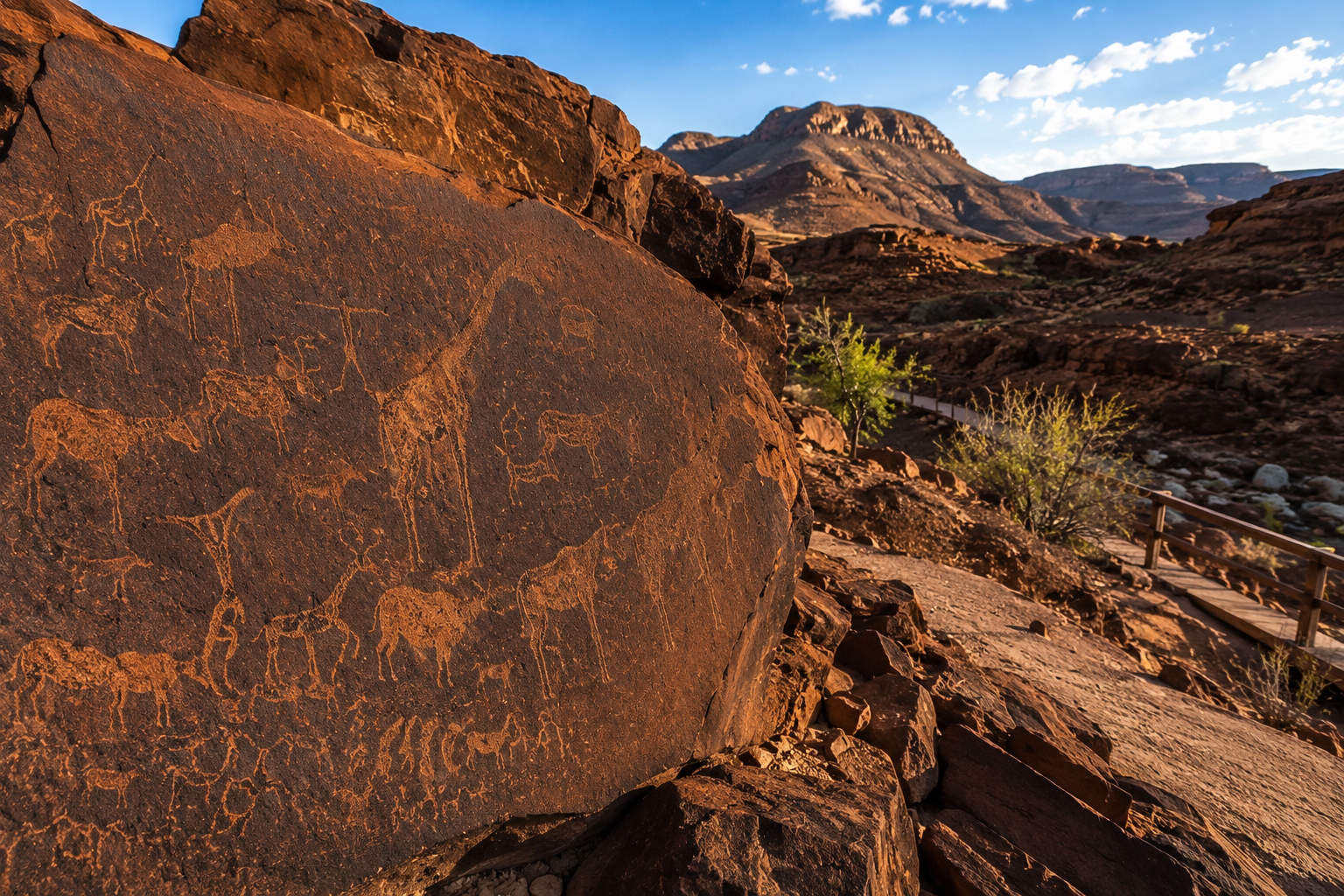
Damaraland is equally significant for its cultural heritage. Hidden among the rocky hills lies Twyfelfontein, a UNESCO World Heritage Site that preserves one of Africa’s largest collections of prehistoric rock engravings. Created thousands of years ago by the San people, these ancient carvings depict wildlife, hunting scenes, and symbolic figures, offering valuable insight into the spiritual beliefs and daily life of some of southern Africa’s earliest inhabitants.
Several remarkable geological attractions can also be found throughout the region. The famous Organ Pipes consist of perfectly aligned basalt columns formed by volcanic activity over 120 million years ago, while the nearby Burnt Mountain displays striking layers of red, purple, and black rock that glow brilliantly during sunset. Together, these natural wonders illustrate the immense geological forces that shaped Namibia long before human civilisation.
One of the greatest attractions of Damaraland, however, is its overwhelming sense of space and solitude. Roads stretch for hundreds of kilometres through untouched wilderness, where there are few signs of modern development and the silence is broken only by the wind. As daylight fades, the landscape transforms once again beneath an exceptionally dark sky. With almost no artificial light pollution, Damaraland offers some of the finest stargazing opportunities in Namibia, where the Milky Way appears in breathtaking clarity above the ancient mountains.
Rather than being defined by a single iconic viewpoint, Damaraland is a destination best experienced as a journey. Every valley, dry riverbed, and rocky ridge tells a story of geological evolution, wildlife adaptation, and human history. It is a place that invites travellers to slow down, absorb the vastness of the landscape, and discover one of Namibia’s most authentic wilderness regions.
Windhoek
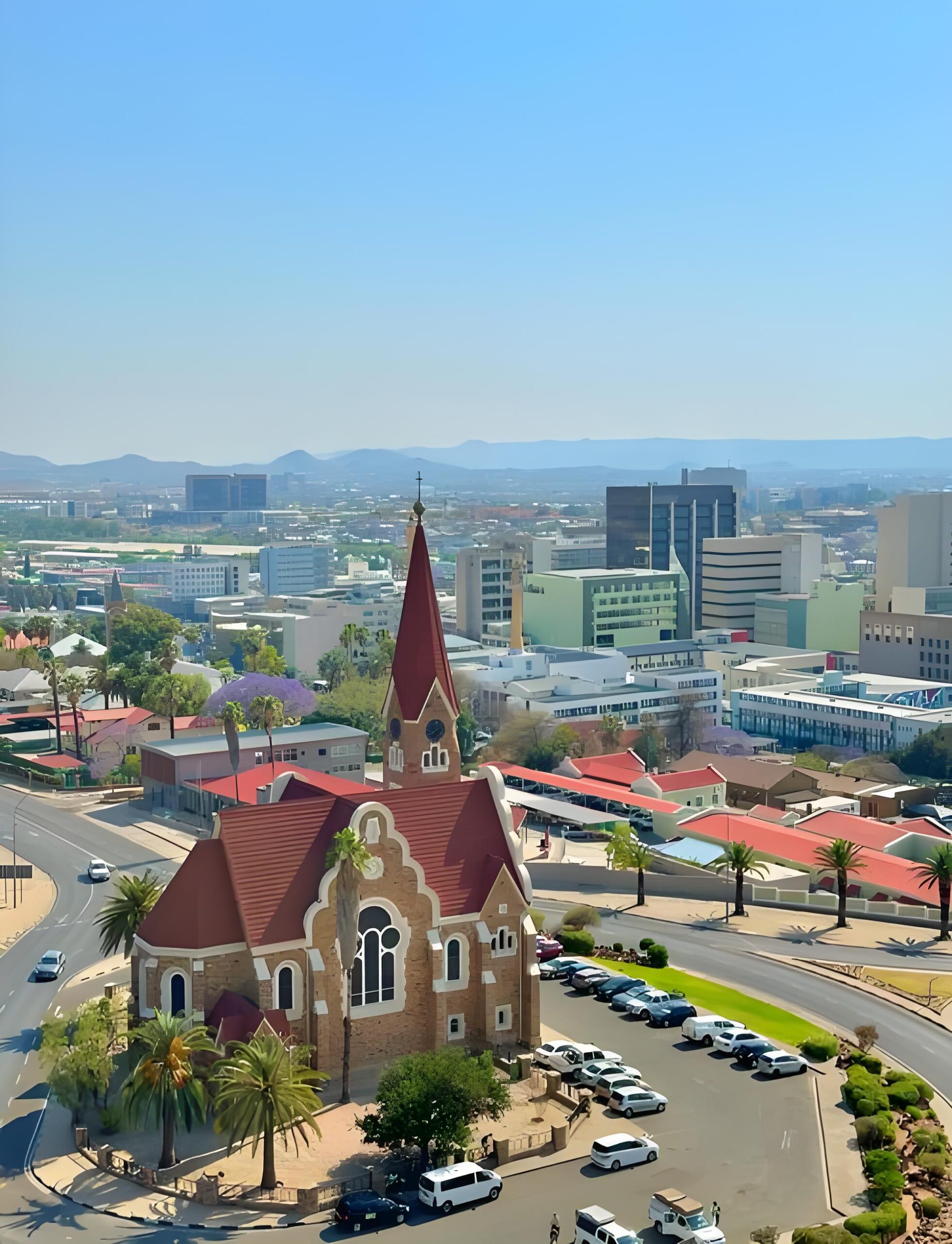
Windhoek is the capital and largest city of Namibia, serving as the primary gateway for almost all international travelers entering the country. Nestled in a highland basin surrounded by rolling hills, the city blends German colonial heritage with modern African urban life, creating a unique cultural atmosphere that reflects Namibia’s historical complexity.
Architecturally, Windhoek retains several key colonial landmarks, including historic churches, government buildings, and old town structures, while also featuring modern business districts and vibrant local markets. This contrast between old and new gives the city a layered identity that is both functional and symbolic.
Beyond its urban role, Windhoek is an essential logistical and cultural starting point for Namibia journeys. Most self-drive safaris begin here, where travelers collect vehicles, receive route briefings, and prepare for long-distance exploration into deserts, coastlines, and national parks.
For visitors, Windhoek is not a primary sightseeing destination but a necessary and meaningful transition space between international travel and Namibia’s vast natural landscapes. It provides comfort, structure, and orientation before entering some of the most remote environments in Africa.
Ready to Explore Namibia?
From the iconic dunes of Sossusvlei to the wildlife of Etosha, let Dune Eagle Tours create your unforgettable African adventure.
Small groups • Expert local guides • Tailor-made experiences